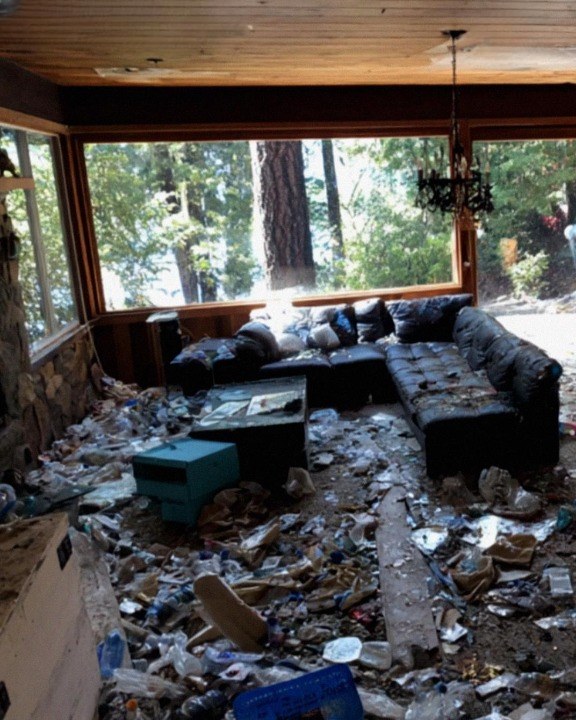
When my mother passed away, she left me one thing that mattered more than anything else in the world: her beloved lake house. It was the place she had bought before she even met my father, a sanctuary filled with her art, her quiet joy, and her deepest sense of peace. To me, it wasn’t just a house. It was sacred ground.
I had spent countless summers there with her. She’d pack a picnic and we’d drive an hour out to the water. While she set up her easel and painted landscapes in soft watercolors, I skipped stones across the lake or built sandcastles on the shore. On rainy days, we curled up together in the big window seat with cocoa, wrapped in blankets, listening to the steady patter on the roof as she read aloud. My favorite memory was when I turned fifteen. We stayed for an entire week, waking every morning to blueberry pancakes cooked on the old gas stove and eating them on the porch as the sunrise painted the lake in gold.
“This house saved me,” she once said as we roasted marshmallows over the fire pit. “When life got hard, I came here to remember who I really was.”
When she died, I was only sixteen. I inherited the house at twenty-one, and I made it clear to everyone—including my father—that no one else was ever to use it. I didn’t rent it out, didn’t bring friends there. I just visited a few times a year, cleaning it, preserving it, and keeping her memory alive.
But life changed fast after her death. My dad remarried within a year. Her name was Carla, and everything about her screamed artificial. From her too-white teeth to her surgically sculpted features, she was the opposite of my mom’s natural warmth. Worst of all, she treated my mother’s memory with thinly veiled contempt.
She redecorated our home, throwing away Mom’s quilts, art, and furniture, replacing them with sterile modern pieces. At dinner parties, she’d slip in sarcastic remarks: “She was so whimsical… almost like she lived in a dream world.” Her friends were crueler, mocking my mom’s love for herbs, crystals, and gardening as if she were some hippie caricature. I never forgot standing in the hallway, seventeen years old, hearing them laugh about my mom’s life as though it were some silly joke.
By the time I was twenty-one, I made sure Dad and Carla knew: the lake house was mine, and it was off-limits. Dad nodded, respectful, but Carla gave me that plastic smile and said, “Of course, honey. Your mother’s little fairy cottage deserves to be preserved exactly as it was.” The way she said fairy cottage made my skin crawl.
Fast forward to the fifth anniversary of my mom’s death. It was the one day each year I reserved solely for her memory. I always drove to the lake house, spent time alone, sometimes bringing flowers, sometimes just sitting quietly in grief. That year, when I pulled into the driveway, my heart dropped. Four unfamiliar cars were parked outside, and loud music thumped from inside. Laughter spilled from the porch.
Through the window, I saw Carla. She was pouring expensive wine for her friends, all of them lounging in swimsuits on the deck. My mother’s special embroidered pillow—the one that read Still waters, strong heart—was being used as a footrest. I froze. My mother’s sanctuary had been violated.
I didn’t storm in. Instead, I noticed the locks weren’t broken. Carla hadn’t forced her way in—she had used a key. Later, I discovered she had gone through my desk drawer while I was away on a work trip and stolen it. She had even texted her friends things like: “Bring the good wine, we’re partying at the hippie hut 😏” and “She’ll never know—she does her grief thing after the weekend LOL.”
When I confronted her, she dismissed me. “Sweetheart, you’re being dramatic. It was just a little gathering. Honestly, it’s a waste to let that place sit empty.” When I reminded her it was the anniversary of my mother’s death, she shrugged. “Your mom wouldn’t want you dwelling in the past. Wallowing isn’t healthy.”
I didn’t scream. I didn’t fight. I called my lawyer.
Luckily, I had installed security cameras at the lake house the year before after a string of neighborhood break-ins. The footage showed everything: Carla unlocking the door with my key, her friends mocking my mom’s artwork, one of them breaking a stained-glass piece she had made by hand. Combined with the stolen texts, we had all the proof we needed.
The legal process was swift. Carla faced criminal charges for trespassing and theft, along with a civil judgment for property damage. She was also served with a restraining order that barred her from coming within 500 feet of me or the lake house. Her own lawyer even dropped her when he realized my mother had once helped his wife through postpartum depression.
The fallout destroyed her marriage to my dad. Two months later, she packed her bags and left. For the first time in years, I felt like justice had been done.
Now, the lake house is safer than ever. The locks have been changed, the security upgraded, and every inch of it remains a reflection of my mom’s spirit. On quiet mornings, I sit on the porch with coffee and whisper, “I love you, Mom. I’ll always protect this place for you.”
Because some places aren’t just houses. They’re the very heart of the people we’ve lost—and it’s our job to keep that heart beating.