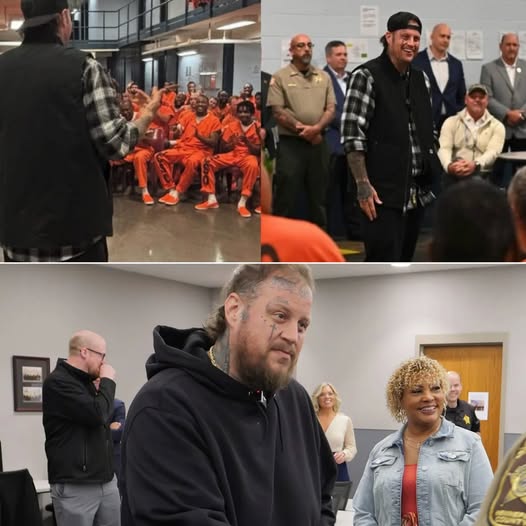
Jelly Roll has never shied away from talking about how deeply the criminal justice system shaped him. Long before he earned awards, chart-topping hits, or mainstream recognition, he was simply Jason DeFord—an inmate in a Nashville correctional facility trying to figure out who he was and who he wanted to become. This Thanksgiving season, he returned to that same place. Not as a celebrity making a public appearance, but as someone who remembers exactly what it feels like to be on the inside during the holidays.
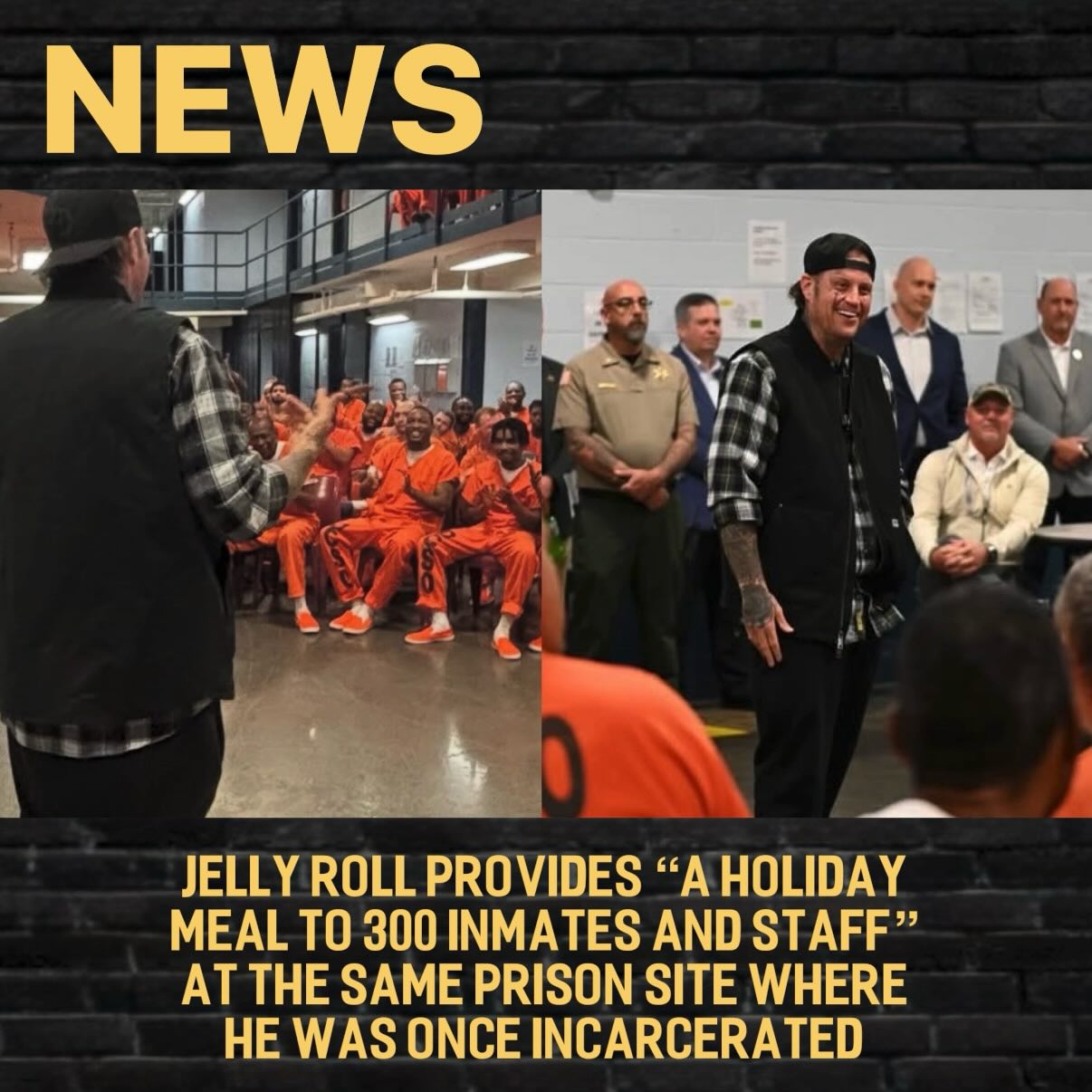
According to Nashville Sheriff Daron Hall, Jelly Roll surprised roughly 300 inmates and staff members by providing them with a full Thanksgiving meal. The visit took place “on the same site where he was once incarcerated,” Hall wrote in a public statement, adding weight to the moment. Jelly didn’t send food from afar or write a check; he walked back through the gates himself, stepping into the very environment that once held him. For anyone who has ever been behind bars, that act alone carries immense emotional gravity.
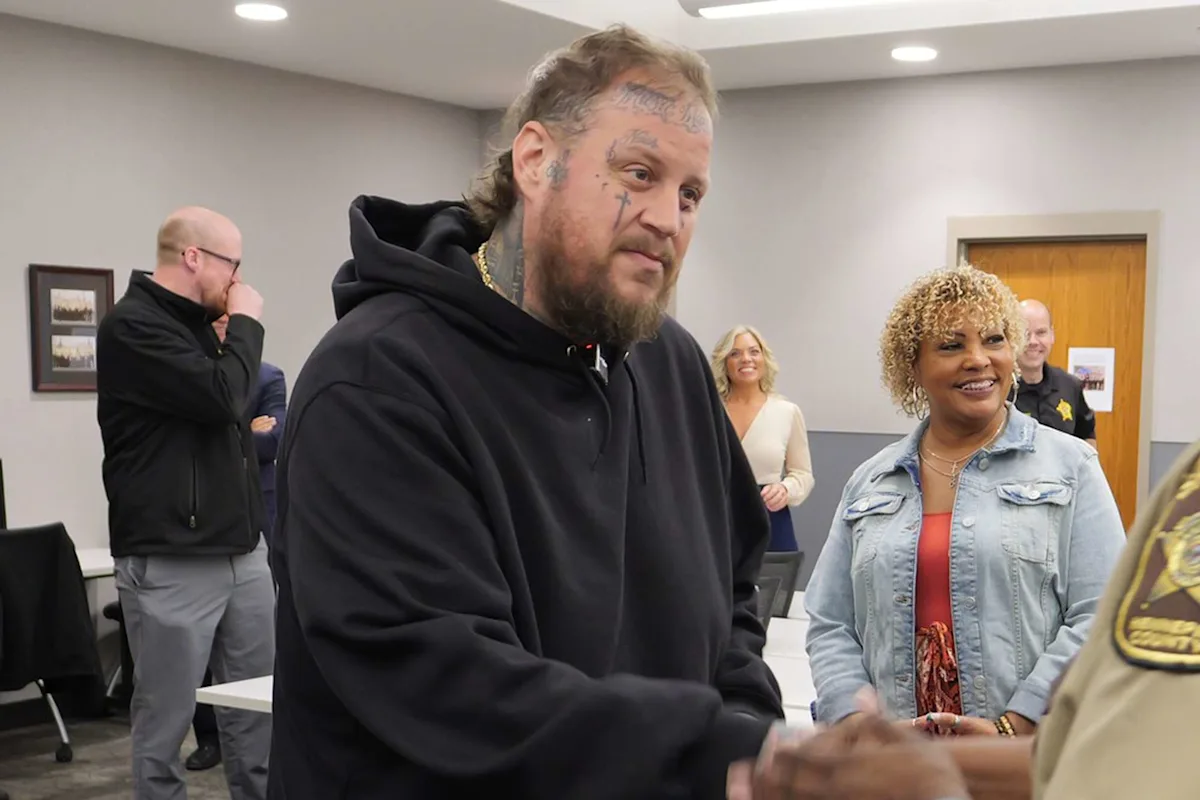
Sheriff Hall expressed sincere gratitude in his message, saying, “During this season, I’d like to give thanks for giving Jelly Roll. Last night, he provided a holiday meal to 300 inmates and staff on the same site where he was once incarcerated. Moments like this show the impact one person can make when they choose to lift others up. Thank you Jelly Roll for turning your past into purpose.” His words captured exactly why the visit mattered: it wasn’t only about food, but about presence, empathy, and acknowledgment of the humanity inside those walls.
For Jelly Roll, actions like this are not publicity stunts—they fit the trajectory he’s been on for years. Much of his music, especially “Save Me,” is rooted in vulnerability. The song’s stripped-down original recording is carried by a worn, aching voice, as if he’s singing directly to the version of himself who felt lost, trapped, and out of options. That honesty connected with millions because it wasn’t glamorized trauma—it was lived truth.
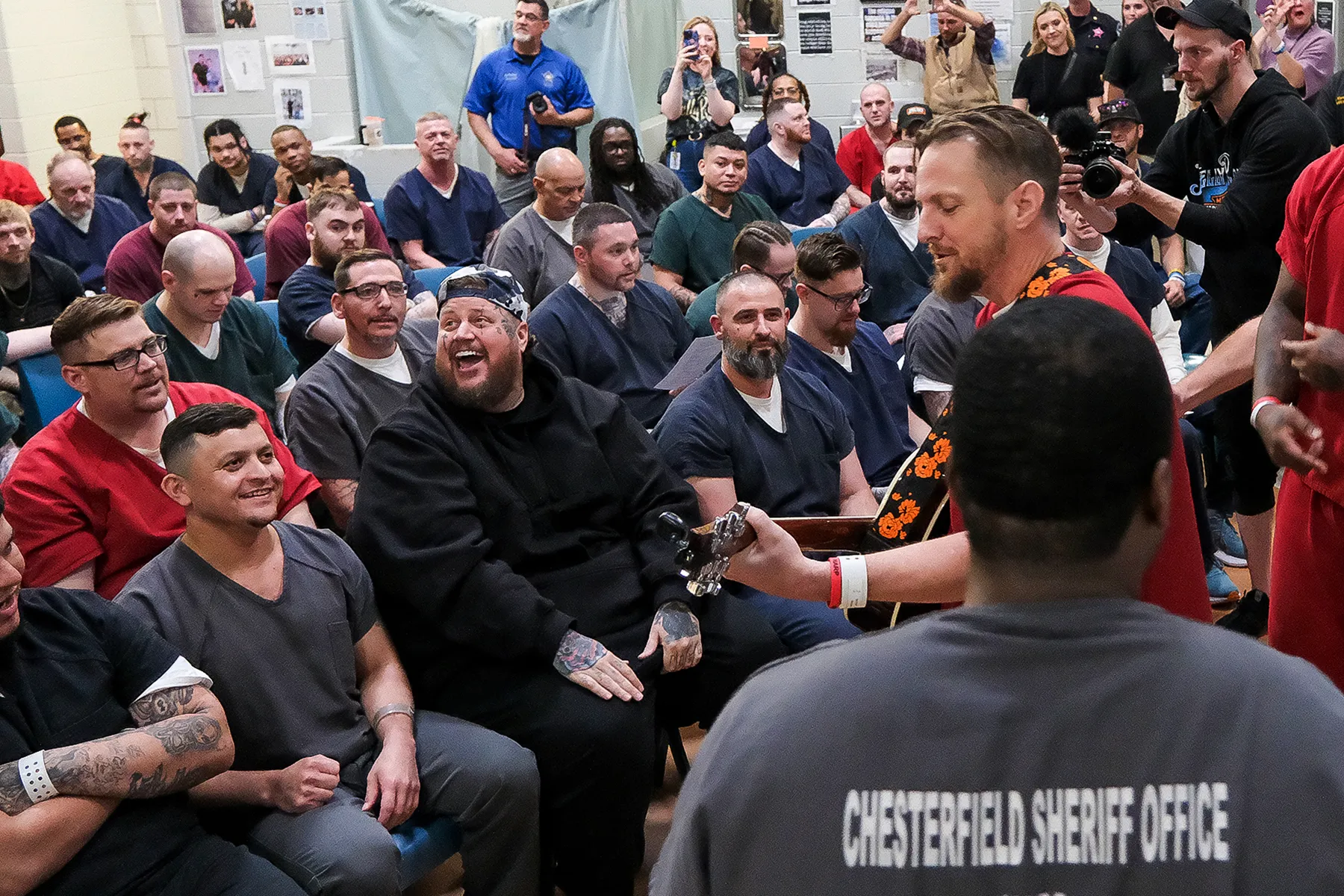
Returning to the Nashville facility with a Thanksgiving meal mirrors that same authenticity. He knows what the holidays can feel like in jail: isolating, heavy, forgotten. By choosing to spend his time there, he acknowledged something simple but powerful—that dignity matters, that kindness reaches places people assume are unreachable, and that being remembered matters even more.
What makes the moment resonate is how deliberately personal it is. Jelly Roll didn’t rewrite his past or try to outrun it. He leaned into it, using the very place that once represented his lowest point as an opportunity to offer hope. For the inmates sitting with their trays that night, his visit wasn’t a celebrity sighting—it was proof that their lives don’t have to end where they are. Change is possible. Redemption is real. And sometimes, the person who understands you best is someone who’s already walked the path you’re on.
Jelly Roll didn’t perform. He didn’t promote anything. He just showed up—one man returning to give back to the people living the reality he once lived himself. And in many ways, that quiet act of service says more about who he is today than any award ever could.