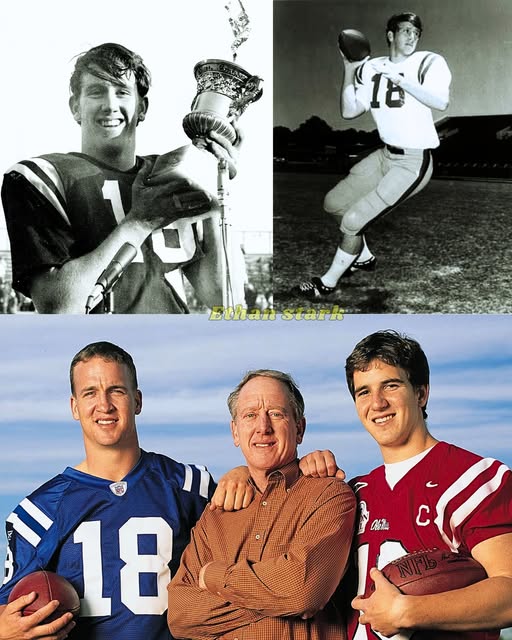

Manning arrived in New Orleans in 1971 with the weight of a second-overall draft pick on his shoulders, the kind of weight that can either straighten a man’s spine or slowly bend it. For ten long seasons, he stood behind a Saints offensive line that too often felt more like a suggestion than a shield. Sundays came and went with the same bitter taste. Nine of those ten years ended in losing records, and the one glimmer of balance — a 7–7 finish in 1979 — felt less like a celebration and more like a brief, surprised inhale of air before being pushed back underwater again.
And yet, somehow, the rest of the league saw something in him that never quite showed up on the scoreboard. Respect. Around the NFL, there was a quiet understanding that what was happening to Archie out there wasn’t normal. Three hundred and thirty-seven sacks over his Saints career — a brutal number by any measure — and still, writers like Sports Illustrated’s Paul Zimmerman believed it should’ve been even worse. He once noted how defensive ends, especially Jack Youngblood of the Rams, would ease up, choosing mercy over punishment on a quarterback who was already taking more than his share of punishment. Ironically, the very men sent to crush him sometimes softened the blow.
Manning remembered it, too. After a game in 1974, he told the Los Angeles Times that Youngblood had been kind enough to pick him up every time he drove him into the turf — a strange but genuine moment of camaraderie in a sport built on violence. Years later, Archie would laugh about it, flipping the script with a playful jab: Youngblood, he joked, owed part of his Hall of Fame career to all the times he’d been allowed to sack him. “He wouldn’t have gotten in,” Archie liked to say, “without having me to sack.” The humor was dry, the kind that grows from repeated disappointment and a stubborn refusal to go completely bitter.
Statistically, he shined in 1972. He led the league in attempts and completions, and topped the NFC in passing yards — all while the Saints crawled to a 2–11–1 record. Imagine that for a moment: throwing more than anyone else, completing more passes than anyone else, and still walking off the field as a loser nearly every week. There’s a special kind of loneliness in numbers like that.
Then came 1976. His right shoulder gave out, and surgery stole the entire season from him. While his teammates continued the grind, Manning sat in the radio booth, lending his voice to the Saints broadcasts after Dick Butkus abruptly stepped away from the role. From quarterback to commentator, watching the game instead of living inside it — it was another reminder that his career was never going to follow a clean, heroic arc.
1978 brought a small but meaningful recognition. Manning led the Saints to a 7–9 record, and the football world finally tipped its hat. He was named NFC Player of the Year by UPI and earned All-NFC honors from both UPI and The Sporting News. He even made the Pro Bowl in 1978 and again in 1979. For a fleeting moment, the tide seemed to turn, the narrative wobbling between tragedy and triumph.
The final chapters of his career came in different colors — first with the Houston Oilers, then the Minnesota Vikings — before he finally stepped away from the game in 1984. Thirteen seasons. Over 23,000 passing yards. 125 touchdowns. More than 2,000 completions, which ranked him 17th in NFL history at the time. He even ran for over 2,000 yards and 18 touchdowns, taking hits not just in the pocket but out in the open field, refusing to play safely even when the odds begged him to.
But the record… that’s the part that hurts to read. As a starting quarterback, he finished 35–101–3. The worst winning percentage in NFL history for someone with that many starts. No winning seasons. No playoff appearances. Ten-plus years in the league, and never once did the postseason call his name.
And still — this is the part numbers never tell you — Manning’s legacy can’t be measured only by wins and losses. It lives in the respect of his peers, in the jokes shared with former rivals, in the toughness that refused to fold, and in the sacrifice of a man who kept standing in the pocket long after logic told him to run. He didn’t leave the game as a champion. He left it as a survivor. And sometimes, that tells the better story.